

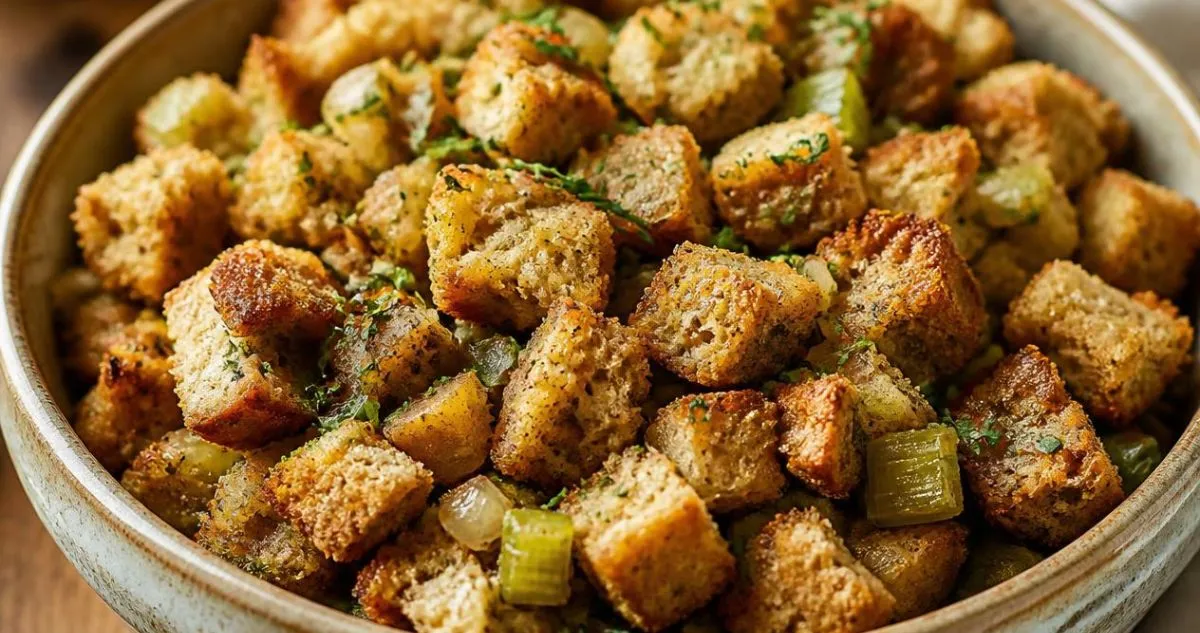
My First Keto Thanksgiving Almost Didn’t Have Stuffing
The year I went keto, I nearly skipped stuffing altogether. I stood in my kitchen the night before Thanksgiving, staring at a bag of pork rinds and a head of cauliflower, convinced I was about to ruin a family tradition. I chopped celery and onion out of habit, sautéed them in butter, and folded everything into a skillet of cubed radishes and crushed rinds almost as an experiment. My uncle, who has no idea what “net carbs” means, went back for seconds. That skillet became the base of every keto stuffing I’ve made since.
Looking for more easy keto ideas?
Grab my free eBook (21 Free Keto Recipes) and discover delicious low-carb meals you can make at home!
Why Regular Stuffing Doesn’t Work on Keto (and What Does)
Traditional stuffing relies on bread for its structure and starch content, usually 30 to 40 grams of carbs per serving before you even add gravy. To build a low-carb version that still holds together and tastes like Thanksgiving, I lean on a few keto-friendly stand-ins: cubed radishes (they lose their peppery bite once cooked and take on a texture close to potato), almond flour “cornbread,” or a mix of chopped mushrooms and pork rinds for savory depth.
Traditional stuffing gets its rich, savory flavor from the Maillard reaction, a natural browning process that occurs when proteins and sugars are cooked over high heat. In this recipe, I get that same browning by roasting the vegetables and pork rind mixture uncovered for the last 10 to 15 minutes, letting the edges crisp and caramelize instead of relying on bread crust. I also brown the sausage separately first; rendering out the fat and getting a deep sear on the meat adds a layer of umami that a boiled or steamed version simply won’t have.
A common keto stuffing mistake is treating cauliflower or radishes like bread. Bread is naturally dry and absorbent, allowing it to soak up broth without becoming soggy, while vegetables require a different approach. Vegetables release their own water as they cook, so if you add the same amount of liquid you’d use in a traditional recipe, you’ll end up with soup. I’ve adjusted the broth ratio here specifically to account for that.
Keto Stuffing Recipe
Prep time: 20 minutes | Cook time: 45 minutes | Serves: 8
Ingredients

- 2 lbs (900 g) daikon radish or regular radishes, peeled and cut into ½-inch (1.25 cm) cubes
- 1 lb (450 g) breakfast sausage, casings removed if applicable
- 4 tbsp (56 g) unsalted butter, divided
- 1 medium yellow onion, diced (about 150 g)
- 3 celery stalks, diced (about 150 g)
- 8 oz (225 g) cremini mushrooms, sliced
- 3 cloves garlic, minced
- 2 large eggs, beaten
- 1 cup (240 ml) chicken or turkey bone broth
- 1 cup (30 g) crushed plain pork rinds
- 2 tbsp (8 g) fresh sage, chopped (or 2 tsp dried)
- 1 tbsp (4 g) fresh thyme leaves (or 1 tsp dried)
- ½ cup (50 g) chopped pecans (optional, for crunch)
- Salt and black pepper, to taste
Instructions
- Parboil the radishes: Bring a large pot of salted water to a boil. Add the cubed radishes and cook for 6 to 8 minutes, until just fork-tender but not mushy. Drain thoroughly and set aside; excess water here is the number one cause of soggy stuffing.
- Brown the sausage: In a large oven-safe skillet over medium-high heat, cook the sausage, breaking it into small crumbles, until deeply browned, about 8 minutes. Transfer to a bowl, leaving the rendered fat in the pan.
- Sauté the aromatics: Heat 2 tablespoons of butter in the same skillet, then sauté the onion, celery, and mushrooms for 7 to 8 minutes until softened and golden. Add the garlic and cook for another 30 seconds to release its aroma.
- Combine: Preheat the oven to 375°F (190°C). Return the sausage to the skillet and stir in the parboiled radishes, sage, thyme, the remaining butter, crushed pork rinds, and optional pecans. Finish by seasoning generously with salt and pepper.
- Add the binder: In a small bowl, whisk the eggs into the bone broth, then pour evenly over the stuffing mixture and stir gently to combine.
- Bake: Transfer the skillet to the oven (or move the mixture to a greased baking dish) and bake uncovered for 25 to 30 minutes, until the top is golden brown and slightly crisp at the edges.
- Rest and serve: Let the stuffing rest for 5 minutes before serving; this gives the eggs time to fully set so the stuffing holds its shape when scooped.
Enjoyed this recipe?
Don’t miss my free eBook (21 Free Keto Recipes) with even more low-carb meals to try!
Nutritional Overview (Per Serving)
| Nutrient | Amount |
|---|---|
| Calories | ~290 kcal |
| Total Fat | ~24 g |
| Net Carbs | ~4 g |
| Protein | ~13 g |
| Fiber | ~2 g |
Values are estimates based on standard ingredient databases and will vary depending on specific brands and substitutions used. If you’re tracking macros closely, I recommend running the exact ingredients you use through a nutrition calculator.
Variations on This Recipe
Cauliflower Keto Stuffing

Swap the radishes for an equal weight of cauliflower florets, cut small. Because cauliflower releases more water than radish, reduce the bone broth to ¾ cup (180 ml) and roast the parboiled florets on a sheet pan for 10 minutes before combining to drive off excess moisture.
Almond Flour Cornbread-Style Stuffing

Bake a simple almond flour “cornbread” (2 cups almond flour, 4 eggs, ¼ cup melted butter, 1 tsp baking powder) in an 8×8 pan at 350°F (175°C) for 20 minutes, then cube and dry it out in a 300°F (150°C) oven for 15 minutes before folding it into the sausage and vegetable mixture in place of the radish and pork rinds.
Vegetarian Keto Stuffing

Omit the sausage and increase the mushrooms to 1 lb (450 g), using a mix of cremini and shiitake for extra depth. Replace the chicken broth with a rich vegetable or mushroom broth, and add 2 tablespoons of nutritional yeast for a savory, umami boost.
Batch Cooking and Meal Prep

This stuffing scales well for a crowd or for prepping ahead of a busy holiday. I usually parboil the radishes and brown the sausage up to two days in advance, storing each component separately in the fridge. On the day of cooking, I combine everything, add the egg and broth mixture, and bake as directed; this cuts the active hands-on time on Thanksgiving Day down to about 15 minutes.
For a double batch, cook the sausage and vegetables in two separate pans rather than overcrowding one skillet; too much food in the pan traps steam and prevents the browning that gives this stuffing its flavor.
Storage Guide
| Storage Method | Duration | Notes |
|---|---|---|
| Refrigerator | 3 to 4 days | Store in an airtight container once fully cooled |
| Freezer (baked) | Up to 2 months | Wrap tightly; texture softens slightly on thawing |
| Reheating | N/A | Cover with foil and reheat at 350°F (175°C) for 15 to 20 minutes |
Common Mistakes and How to Fix Them
- Mistake: Soggy stuffing. Fix: Make sure the radishes or cauliflower is thoroughly drained after parboiling, and don’t skip the uncovered bake; the open oven time lets excess moisture evaporate.
- Mistake: Bland flavor. Fix: Season in layers; salt the radishes while parboiling, season the sausage as it browns, and taste the full mixture before baking. Bread-based stuffing gets flavor from the bread itself soaking up seasoned broth; without it, you need to season every component individually.
- Mistake: Stuffing falls apart when served. Fix: Don’t skip the egg-and-broth binder, and let the dish rest for at least 5 minutes after baking so the eggs finish setting.
- Mistake: Radishes taste too peppery. Fix: Parboiling is essential; it mellows radishes’ natural sharpness significantly. If you’re sensitive to any lingering bite, an extra 2 minutes in the boiling water helps.
Frequently Asked Questions
Is stuffing keto-friendly?
Traditional bread-based stuffing is not keto-friendly, since bread is high in starch and carbohydrates. This keto stuffing recipe replaces bread with low-carb vegetables and pork rinds to keep net carbs low while preserving a similar texture and flavor.
What can I use instead of bread in keto stuffing?
Common substitutes include cubed radishes or daikon, cauliflower, crushed pork rinds, and almond flour-based “cornbread.” Each brings a slightly different texture, so the right choice depends on whether you want something closer to potato (radish), rice-like (cauliflower), or bread-like (almond flour).
Can I make keto stuffing ahead of time?
Yes. You can parboil the radishes and brown the sausage up to two days ahead, then combine and bake the day you plan to serve it. This is one of the easier keto Thanksgiving recipes to prep in stages.
Why is my keto stuffing mushy?
Mushy stuffing is usually caused by too much liquid or vegetables that weren’t drained well. Vegetables release water as they cook, so keto versions need less added broth than bread-based recipes.
Can I freeze keto stuffing?
Yes, baked keto stuffing freezes well for up to 2 months. Thaw it in the refrigerator overnight before reheating, and expect a slightly softer texture than fresh.
Is this keto stuffing recipe gluten-free?
Yes, as written, this recipe contains no wheat or gluten-containing ingredients. Always check the label on your pork rinds and sausage, since some brands add fillers.
How do I make this stuffing dairy-free?
Substitute the butter with an equal amount of avocado oil or ghee, which is typically well tolerated on a dairy-free diet.
What other keto Thanksgiving recipes pair well with this stuffing?
This stuffing pairs naturally with a roasted turkey, cauliflower mash, and a low-carb gravy thickened with xanthan gum instead of flour, all common components in a full keto Thanksgiving spread.
