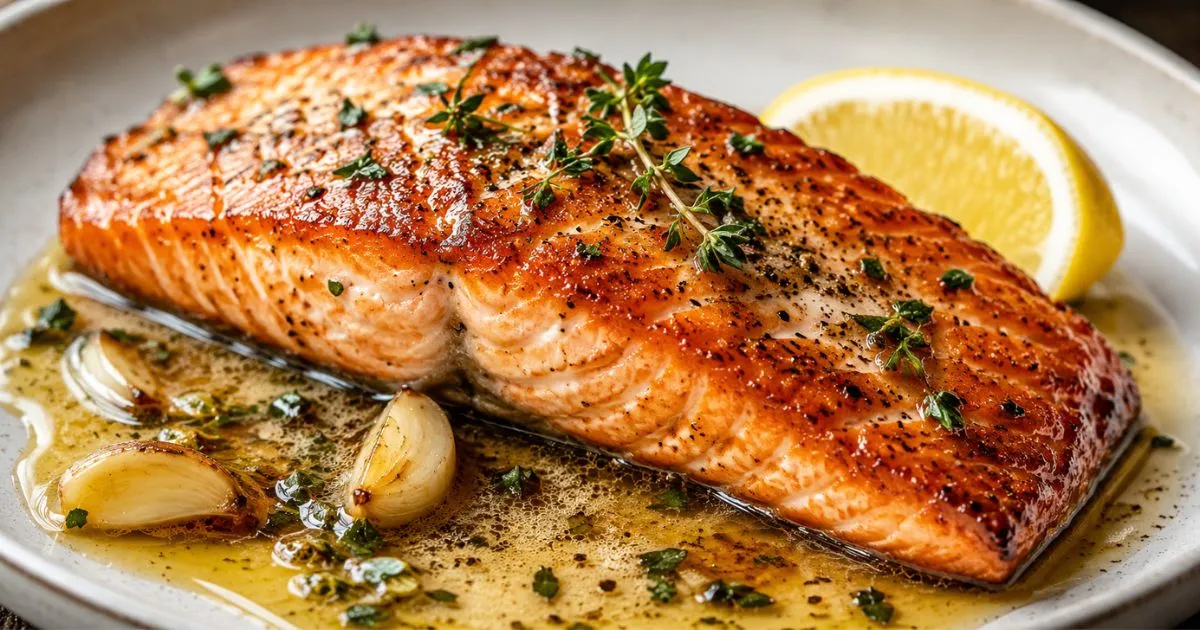
The first time I tried to make a salmon keto recipe, I overcooked it so badly the fillet curled up like a leather shoe. I’d been so focused on tracking my macros that I completely ignored the pan temperature. That dry, chalky disaster taught me more about salmon cookery than any recipe card ever had. A year and dozens of fillets later, I’ve dialed in a method that delivers a perfectly seared crust with a buttery, just-cooked center every single time. This is the recipe I wish I’d had from the start.
Why Salmon Is the Ultimate Keto Protein
When you’re eating keto, protein quality matters as much as protein quantity. Salmon ticks every box: it’s rich in complete protein, loaded with fat-soluble vitamins like D and B12, and packed with omega-3 fatty acids (EPA and DHA) that actively support the inflammatory balance your body needs when it’s in ketosis. I’ve found that fatty fish like salmon keep me satiated far longer than leaner proteins, a genuine advantage when you’re managing hunger on a low-carb eating plan.
What makes salmon especially brilliant for a keto salmon recipe is its natural fat content. A 170g (6 oz) Atlantic salmon fillet contains roughly 17g of fat with zero carbohydrates. You don’t need to add much to hit your fat macros for a meal; a knob of grass-fed butter or a drizzle of quality olive oil is all it takes. The fish does the heavy lifting.
Looking for more easy keto ideas?
Grab my free eBook (21 Free Keto Recipes) and discover delicious low-carb meals you can make at home!
The Science Behind a Perfect Salmon Sear
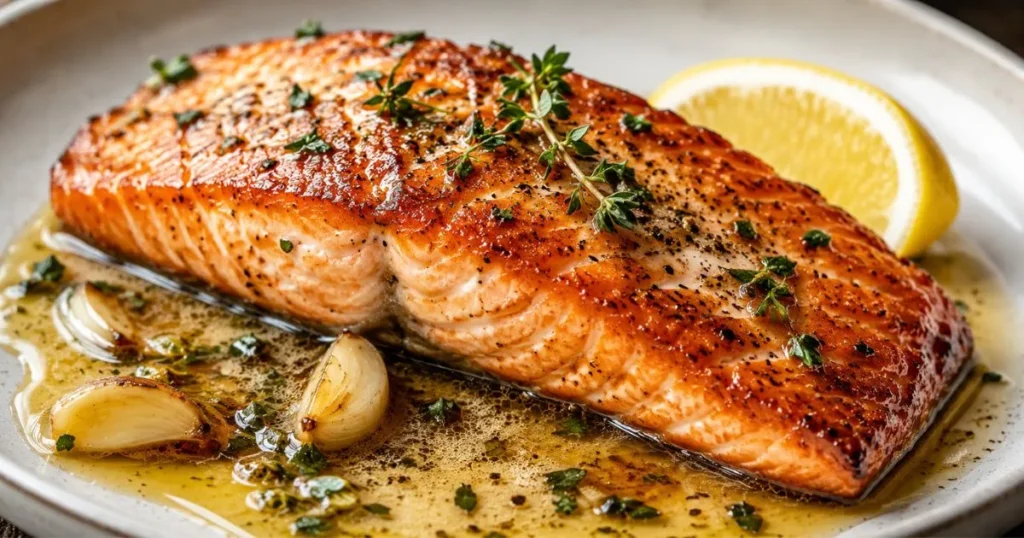
A great sear isn’t magic; it’s the Maillard reaction at work. When salmon hits a hot pan, the amino acids and natural sugars on the surface of the flesh react at temperatures above 140°C (285°F), creating hundreds of new flavor compounds and that irresistible golden-brown crust. To trigger this properly, the pan must be genuinely hot and the fish must be dry before it touches the surface.
From my experience, the most common mistake people make when cooking salmon at home is placing it into a pan before the pan is properly heated, especially when the fish is still cold and damp. The moisture steams the fish before it can sear, and the low temperature means you’re braising rather than browning. Pat your fillets completely dry with paper towels, bring them close to room temperature for 10–15 minutes before cooking, and preheat your pan until a drop of water skitters and evaporates immediately. That’s the signal to add your fat and fish.
Choosing the Right Salmon
Not all salmon is equal, and for a keto salmon recipe, the cut and source genuinely matter. Wild-caught sockeye or coho salmon is leaner with a more intense flavor, while farmed Atlantic salmon carries more fat and a milder, buttery taste. I use Atlantic salmon most often for weeknight cooking because the higher fat content makes it more forgiving; it’s harder to overcook.
I recommend selecting skin-on salmon fillets, as the skin serves as a natural buffer against the pan’s heat, helping preserve the texture and moisture of the flesh during searing. Rendered salmon skin also becomes wonderfully crispy, a textural bonus you don’t want to skip.
A simple way to assess freshness is to lightly press the flesh. Fresh salmon feels firm and springs back when touched. Avoid any fillet that smells overly fishy, as quality salmon should have a fresh, ocean-like aroma rather than a sharp or pungent odor.
Essential Keto-Friendly Ingredients
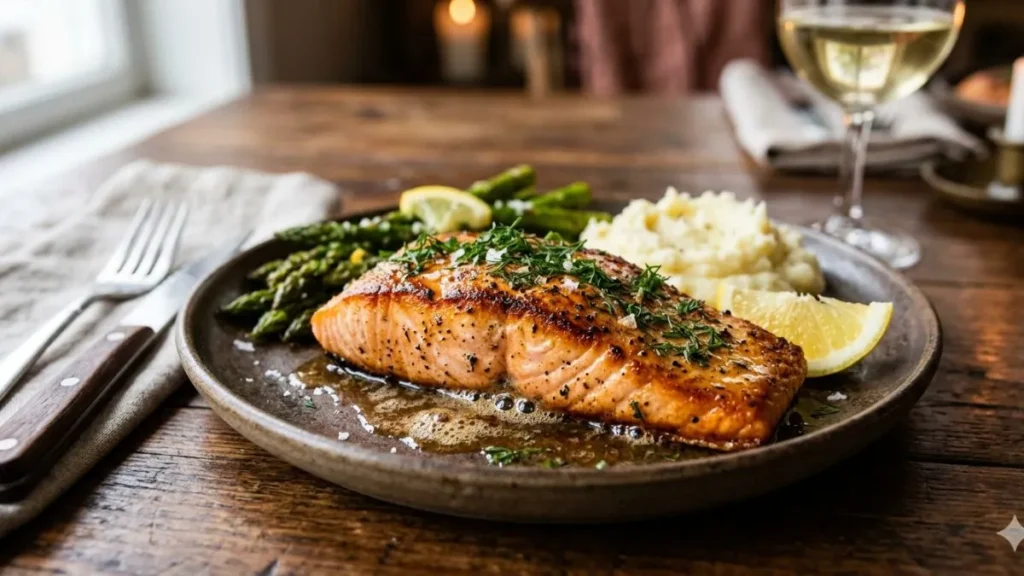
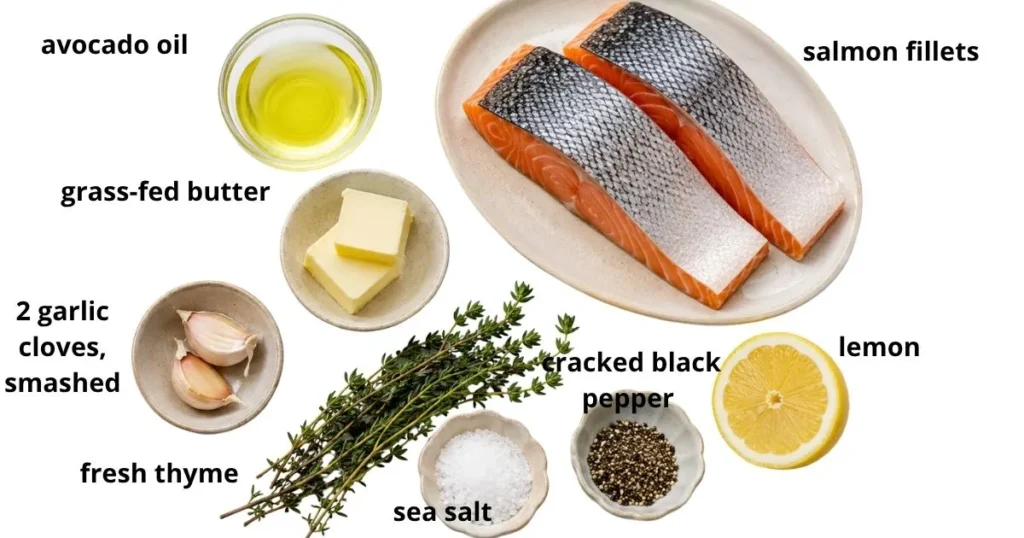
- Salmon fillets (skin-on): 170–200g / 6–7 oz per person is a generous portion
- Avocado oil or ghee: Both have high smoke points, ideal for searing at keto-appropriate temperatures
- Grass-fed butter: Added at the end for basting, the milk solids brown into nutty, rich foam
- Fresh garlic: Two cloves, smashed; releases allicin compounds that flavor the basting butter
- Fresh thyme or rosemary: Aromatic herbs that perfume the butter as it bastes
- Sea salt and cracked black pepper: Season generously; salmon can handle it
- Lemon: A squeeze at the end brightens the richness without adding meaningful carbs
The Master Keto Salmon Recipe
Pan-Seared Butter-Basted Salmon
Prep time: 10 minutes | Cook time: 8–10 minutes | Serves: 2
Pan-Seared Butter-Basted Salmon
Ingredients
Method
- Take the salmon out of the fridge and let it sit for 15 minutes before you start cooking. Pat both sides thoroughly dry with paper towels. Season the bare side of the meat heavily with salt and pepper. Leave the skin as it is for now; salt takes out moisture and can stop it from getting crispy.
- Place a heavy-bottomed stainless steel or cast-iron skillet over medium-high heat for 2 to 3 minutes until it becomes very hot. Add the avocado oil and swirl to coat the pan. The oil should shimmer immediately.
- Place the fillets in the pan with the skin side facing down, and use a spatula to press them gently for the first 30 seconds to make sure they are fully touching the pan. Resist the urge to move them. Cook for 4 to 5 minutes until the skin becomes deep golden and crispy, and the flesh inside turns white or cloudy about two-thirds up the side.
- Flip the fillets carefully. Put the butter, garlic, and thyme directly into the pan right away. As the butter starts to foam, gently tilt the pan and use a spoon to keep pouring the fragrant butter over the meat side to cook it evenly. Cook for another 2 to 3 minutes, basting often and leaving the pan uncovered.
- Check if the salmon is done by gently flaking it at the thickest part; it should still have a slightly clear center. Use an instant-read thermometer to make sure it reaches 52–55°C or 125–131°F for a perfectly cooked, smooth texture. If you like your food fully cooked, try to reach 60 degrees Celsius or 140 degrees Fahrenheit.
- Put the dish on a warm plate, add some lemon juice, and let it sit for 2 minutes before you serve it.
Notes
Enjoyed this recipe?
Don’t miss my free eBook (21 Free Keto Recipes) with even more low-carb meals to try!
Nutritional Overview (Per Serving)
| Nutrient | Amount (approx.) |
|---|---|
| Calories | 420 kcal |
| Protein | 38g |
| Total Fat | 29g |
| Saturated Fat | 9g |
| Total Carbohydrates | 1g |
| Net Carbs | 1g |
| Fiber | 0g |
Note: Nutritional values are estimates based on a 170g Atlantic salmon fillet with butter and oil as listed. Values will vary depending on the exact size and fat content of your fish. For precise tracking, weigh your fillet raw and input it into your preferred macro calculator.
Keto Salmon Recipe Variations
Lemon Herb Salmon with Compound Butter
Make a quick compound butter by mashing together 4 tablespoons / 60g softened grass-fed butter with the zest of one lemon, 1 tablespoon / 4g fresh dill, and a pinch of salt. Roll in cling film, refrigerate for 20 minutes, then slice and place a disc directly on the hot seared salmon the moment it comes off the heat. As it melts, it creates an instant, elegant sauce. This is one of my favorite ways to entertain, impressive with minimal effort.
Cajun-Spiced Keto Salmon
Mix together 1 teaspoon each of smoked paprika, garlic powder, onion powder, dried oregano, and cayenne pepper, then season with salt and black pepper. Gently coat the flesh side of the salmon with the spice blend before placing it in the pan to sear. The spice crust forms a deeply flavored bark using the same Maillard chemistry as the plain sear, just with a Louisiana-inspired profile. Finish with lime juice rather than lemon.
Oven-Baked Garlic Parmesan Salmon
For a hands-off version, preheat your oven to 200°C / 400°F. Mix 2 tablespoons / 30g grated Parmesan (full-fat), 1 tablespoon / 15g softened butter, 1 clove minced garlic, and black pepper into a paste. Spread over the flesh side of the fillets, place skin-down on a lined baking sheet, and bake for 12–15 minutes. The Parmesan creates a golden, slightly cheesy crust that’s entirely keto-compliant and deeply satisfying.
Asian-Inspired Ginger Sesame Salmon
Whisk together 2 tablespoons / 30ml tamari (gluten-free soy sauce), 1 teaspoon / 5ml sesame oil, 1 teaspoon freshly grated ginger, and a few drops of liquid stevia or monk fruit sweetener in place of the traditional sugar. Marinate the salmon for 30 minutes, then sear as per the master recipe. The tamari provides umami depth while keeping carbs negligible. Sesame seeds pressed onto the flesh before searing add a pleasant nuttiness and crunch.
Keto Side Dishes to Serve with Salmon
The right side dish completes the meal without knocking you out of ketosis. Here are the combinations I return to most often:
- Garlic butter cauliflower mash: A near-perfect substitute for mashed potato. Roast cauliflower florets first for a deeper flavor before blending with butter and cream.
- Zucchini noodles (zoodles) with brown butter: Spiralize courgette/zucchini and toss briefly in a hot pan with brown butter and sea salt. Ready in 3 minutes and provides a mild, neutral base for the rich salmon.
- Wilted spinach with garlic: Iron-rich, fast to prepare, and the slight bitterness of the greens cuts through the richness of the butter-basted fish beautifully.
- Roasted asparagus with lemon: Asparagus is low in carbs and high in fiber. Roast at 220°C / 425°F for 10 minutes with olive oil and salt; finish with lemon zest.
- Avocado cucumber salad: Dice avocado and cucumber, dress with olive oil, lime juice, fresh coriander, and flaky salt. Cool, creamy, and hydrating, a great contrast to the warm fish.
Make-Ahead and Meal Prep Tips
Salmon is one of the more perishable proteins to batch cook, but with the right approach, it works well for weekly meal prep. I’ve found that the oven-baked variations hold up better than pan-seared when reheated, since the skin loses its crispness in the fridge regardless.
- Cook from fresh where possible: Pan-seared salmon takes under 10 minutes; it’s genuinely faster to cook fresh than to reheat carefully without drying out.
- Batch-cook for salads: If meal prepping, bake a larger portion and flake cooled salmon into grain-free salads throughout the week. Cold, flaked salmon over greens with avocado and a tahini-lemon dressing is a complete keto lunch.
- Storage: Cooked salmon keeps refrigerated in an airtight container for up to 3 days. Do not freeze cooked salmon; the texture deteriorates significantly on thawing.
- Reheating: Reheat gently in a 150°C / 300°F oven for 8–10 minutes, loosely covered with foil, or eat cold. Microwaving salmon is technically possible, but the smell and texture rarely justify it.
- Marinate ahead: Prepare the Asian ginger sesame marinade up to 24 hours in advance and keep the salmon submerged in the fridge. The flavor develops beautifully overnight.
Common Mistakes and How to Avoid Them
Cooking straight from the fridge
A cold fish dropped into a hot pan drops the pan temperature sharply and cooks unevenly; you end up with an overdone exterior and a cold center. Always rest your salmon at room temperature for 10–15 minutes before cooking. It’s a simple step that makes a real difference.
Moving the fish too soon
Salmon will naturally release from a properly heated pan when it’s ready to be flipped. If you try to move it and it resists, it’s not ready. Trust the pan, wait an extra 30–60 seconds, and try again. Forced flipping tears the flesh and strips the skin.
Overcooking
The most common salmon mistake is cooking until fully opaque and flaky throughout. By that point, you’ve lost the silky, yielding texture that makes salmon so pleasurable to eat. A slightly translucent center at serving means it will be perfectly cooked through by the time it reaches the table after a 2-minute rest.
Using the wrong fat
Olive oil has a lower smoke point than avocado oil or ghee. For high-heat searing, use avocado oil (smoke point ~270°C / 520°F) or ghee (smoke point ~250°C / 480°F). Reserve your best extra virgin olive oil for dressings and finishing; its delicate flavor compounds break down at searing temperatures anyway.
Skipping the dry step
Excess moisture on the surface can prevent salmon from developing a proper sear. Before browning can occur, the water must evaporate, which lowers the pan’s temperature and slows the cooking process. Taking a few extra seconds to thoroughly pat each fillet dry with paper towels can make a noticeable difference in the final texture and color.
Frequently Asked Questions
Is salmon good for keto?
Salmon is one of the best proteins for a ketogenic diet. It contains zero carbohydrates, a high fat content that supports ketosis, and complete protein with all essential amino acids. The omega-3 fatty acids, particularly EPA and DHA, are especially valuable for managing the inflammatory effects that can accompany dietary transitions.
How many net carbs are in a salmon keto recipe?
The master pan-seared recipe in this article contains approximately 1g of net carbs per serving, coming primarily from the fresh lemon juice. Even the more flavored variations, Cajun-spiced and garlic Parmesan, remain under 3g net carbs per serving when using the quantities listed.
Can I use frozen salmon for a keto salmon recipe?
Yes, but there’s one thing to watch out for: let it thaw slowly in the fridge all night instead of using running water or the microwave. Fast melting breaks down the muscle fibers, making the meat soft and watery, which stops it from getting a good sear. Once it’s thawed, use it just like you would with fresh.
What is the best oil for cooking salmon on keto?
For searing at high heat, I prefer avocado oil because it has a very high smoke point and a mild flavor that doesn’t overpower the fish. Ghee is a great option and gives a gentle nutty flavor. Coconut oil can be used, but it adds a strong tropical taste that might not work well with all savory dishes.
How do I know when salmon is done without a thermometer?
Use your finger to lightly press on the thickest part of the fillet. Undercooked salmon feels soft and gives easily. The salmon is cooked just right, so it offers a little resistance when you bite into it, but it still has a gentle bounce to it. Overcooked salmon feels firm and dense. When cooking the fish skin-down, look for the part that’s about three-quarters up the side of the fillet to be slightly cloudy or not completely clear—that’s when you should flip it.
Can I eat salmon every day on keto?
Salmon is a great choice to eat every day for its nutrition, but it’s usually best to include different types of protein in your diet to get a wide range of important nutrients. If you eat farmed Atlantic salmon often, try switching it up with wild-caught fish like sockeye. You can also include other fatty fish such as mackerel, sardines, or trout. All of them work really well within the same keto approach.
What sauces are keto-friendly with salmon?
Many traditional sauces go well with salmon and are also low in carbs. Hollandaise sauce, which is made with egg yolks, butter, and lemon, is naturally suitable for a keto diet. A basic herb crème fraîche made with full-fat crème fraîche, fresh dill, and capers brings a bright, fresh flavor. Sauces made with avocado, tahini mixed with lemon and water, and compound butters are all great choices. Avoid using teriyaki-style glazes, sweet chili sauces, and any sauces that are thickened with cornstarch because they often have a lot of sugar or starch.