Why Most Gluten Free Cakes Fail (and How This Recipe Fixes That)
The first time I baked a gluten free cake, I pulled a dense, gummy brick out of the oven. It smelled wonderful and looked promising, and then I cut into it. Disappointment doesn’t quite cover it.
Here’s what I eventually learned: the problem wasn’t the absence of gluten. It was not understanding what gluten actually does. In traditional baking, gluten forms an elastic network that traps air bubbles and gives cake its lift. Without it, your batter needs a different strategy entirely, and once you understand that, this gluten free cake recipe becomes genuinely easy to get right.
The secret lies in three things: the right flour blend, proper hydration time, and room-temperature ingredients. Get those three right and you will never serve a gummy cake again.
The Gluten Free Cake Recipe That Actually Works
Ingredients
For the cake:
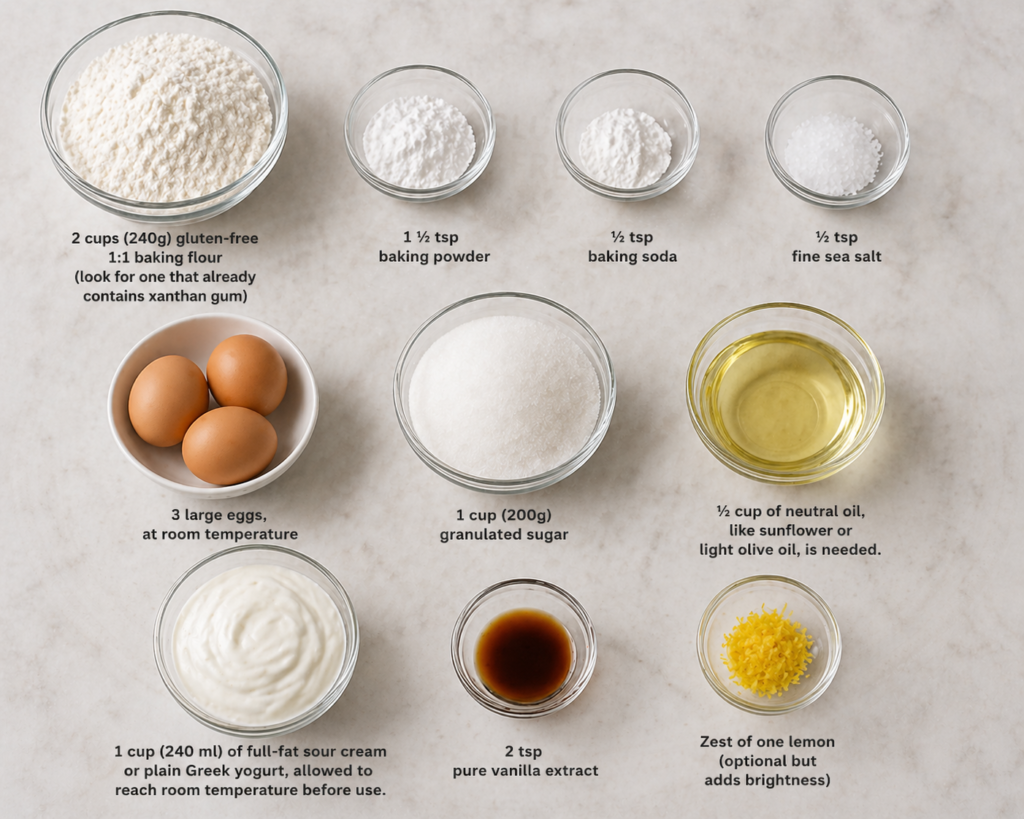
- 2 cups (240g) gluten-free 1:1 baking flour (look for one that already contains xanthan gum)
- 1 ½ tsp baking powder
- ½ tsp baking soda
- ½ tsp fine sea salt
- 3 large eggs, at room temperature
- 1 cup (200g) granulated sugar
- ½ cup of neutral oil, like sunflower or light olive oil, is needed.
- 1 cup (240 ml) of full‑fat sour cream or plain Greek yogurt, allowed to reach room temperature before use.
- 2 tsp pure vanilla extract
- Zest of one lemon (optional but adds brightness)
For a simple vanilla frosting:
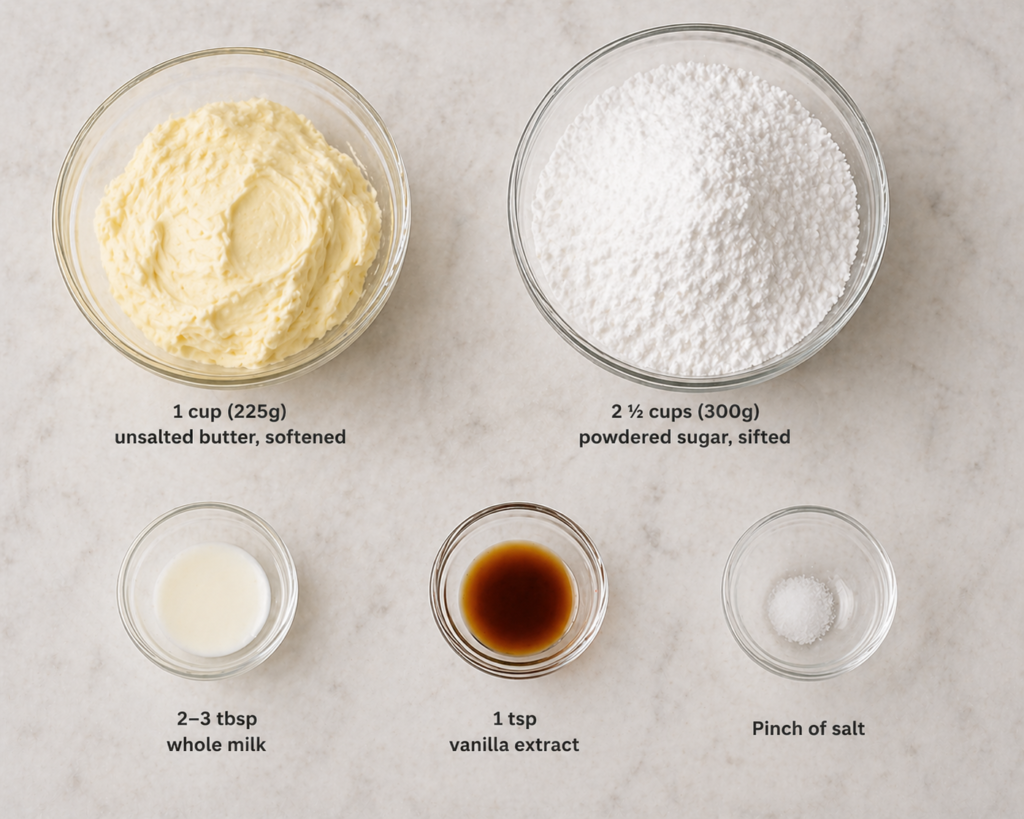
- 1 cup (225g) unsalted butter, softened
- 2 ½ cups (300g) powdered sugar, sifted
- 2–3 tbsp whole milk
- 1 tsp vanilla extract
- Pinch of salt
Substitutions:
- Dairy-free: Use full-fat coconut yogurt instead of sour cream and vegan butter sticks (not spread) instead of butter.
- Egg-free: Use 3 flax eggs (1 tbsp ground flaxseed + 3 tbsp water each, rested 10 minutes). The texture will be a bit more dense, but it will still taste great.
- Lower sugar: Coconut sugar works as a 1:1 swap and adds a subtle caramel depth.
Preparation & Cooking Time
- Prep time: 20 minutes + 10 minutes resting
- Bake time: 30–35 minutes
- Total time: approximately 1 hour
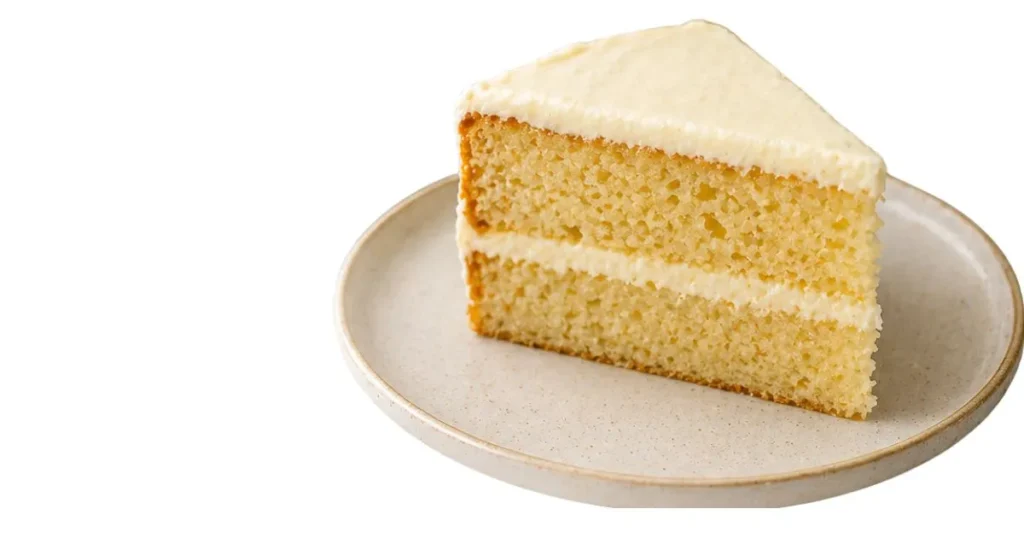
- Yield: 10–12 servings (two 8-inch layers)
Instructions
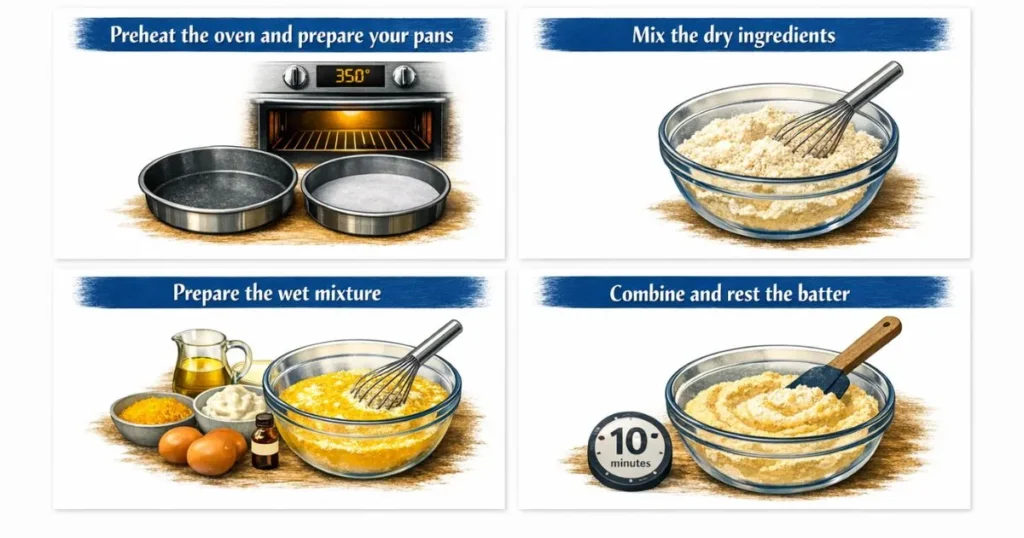
1. Preheat the oven and prepare your pans
Preheat your oven to 350°F (175°C). Lightly coat two 8-inch round cake pans with grease, then line the bottoms with parchment paper.
2. Mix the dry ingredients
In a medium bowl, whisk together the gluten-free flour, baking powder, baking soda, and salt until well combined.
3. Prepare the wet mixture
In a large bowl, whisk the eggs and sugar until the mixture becomes lighter in color and slightly thickened (about 2 minutes by hand or 1 minute with a hand mixer).
Add the oil, sour cream (or Greek yogurt), vanilla extract, and lemon zest. Mix until smooth and fully combined.
4. Combine and rest the batter
Slowly fold the dry ingredients into the wet mixture using a spatula, mixing just until incorporated. Do not overmix.
Let the batter rest for about 10 minutes. This step allows the gluten-free flour to fully absorb the liquid and improves the texture.
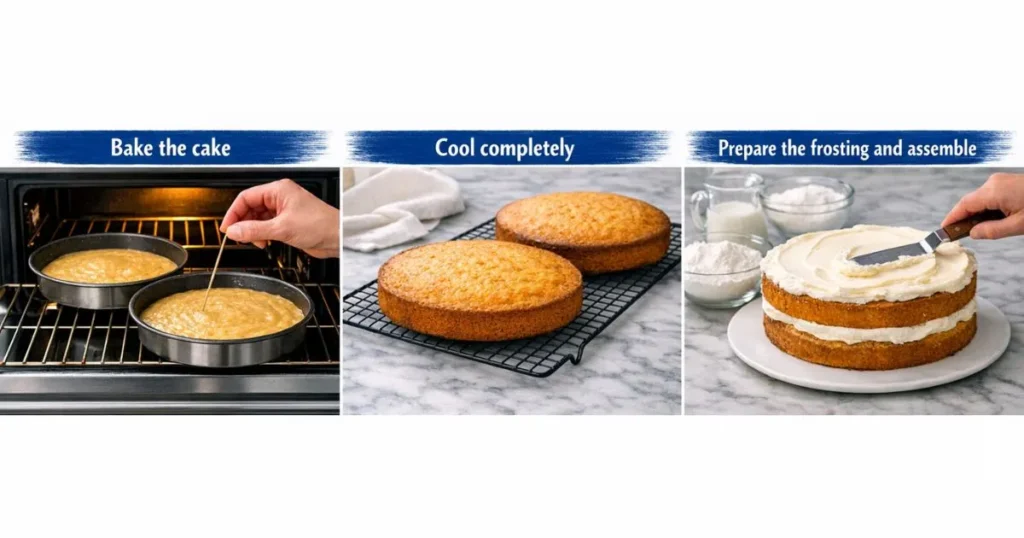
5. Bake the cake
Divide the batter equally among the prepared pans and level the tops.
Bake for 30–35 minutes, rotating the pans halfway through baking for even results.
The cakes are ready when a toothpick inserted into the center comes out clean.
6. Cool completely
Let the cakes cool in the pans for about 15 minutes, then transfer them to a wire rack to cool completely before frosting.
7. Prepare the frosting and assemble
In a large bowl, beat the softened butter for about 2–3 minutes until light and creamy.
Mix in the vanilla extract along with a pinch of salt, then beat until the mixture is smooth and airy. Add the powdered sugar gradually, switching back and forth with the milk.
Spread the frosting between the cake layers and over the top and sides as desired.
Healthier Alternatives
- Reduce sugar by 25%: the lemon zest and vanilla provide enough flavor to keep the cake well-balanced and satisfying.
- Almond flour version: swap out half of the gluten-free flour blend for finely ground almond flour to boost moisture and create a richer texture. Keep in mind, the cake will turn out flatter and denser, similar to a European-style torte.
- Oil-free: substitute the oil with unsweetened applesauce. The cake will be slightly less rich but significantly lower in fat.
- Protein boost: Replace ¼ cup of flour with unflavored or vanilla protein powder. Works particularly well if you are making this as a post-workout treat.
Serving Suggestions
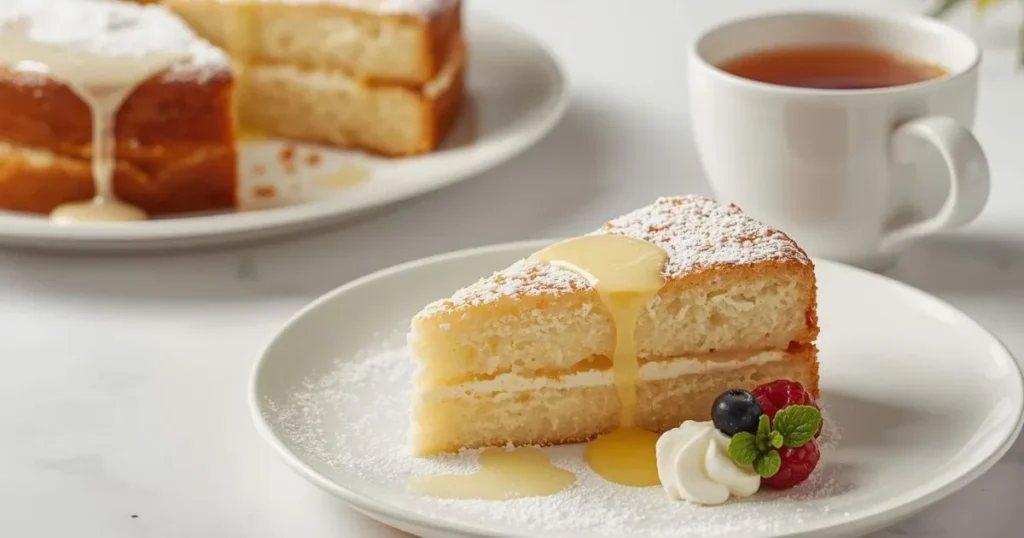
- Fresh berries and lightly whipped cream turn this into an elegant summer dessert.
- A drizzle of warm salted caramel sauce between layers takes it firmly into celebration territory.
- For a weekday treat, skip the frosting entirely and dust with powdered sugar; it holds up beautifully for 2 days at room temperature that way.
- If you love banana-based baking, our banana oat breakfast cookies pair wonderfully alongside a slice of this cake for a weekend brunch spread.
Common Mistakes to Avoid
- Using a flour blend without xanthan gum: Xanthan gum is the binder that replaces gluten’s structure. Without it, the cake crumbles apart when sliced.
- Using cold ingredients straight from the fridge: cold eggs and cold dairy cause the batter to seize and bake unevenly. Set everything out at least 30 minutes before you start.
- Skipping the batter rest: those 10 minutes make a measurable difference in the final texture. Do not skip them.
Storing Tips
- Room temperature: Store frosted cake under a dome for up to 2 days. GF baked goods go stale faster than conventional ones, so do not leave them uncovered.
- Freezer: Unfrosted cake layers freeze exceptionally well for up to 2 months. Wrap each layer securely in plastic wrap, then cover again with foil. Thaw overnight at room temperature before frosting.
- Avoid the fridge if possible: refrigeration dries out GF cakes quickly. If you must refrigerate, bring slices back to room temperature before serving.
Conclusion
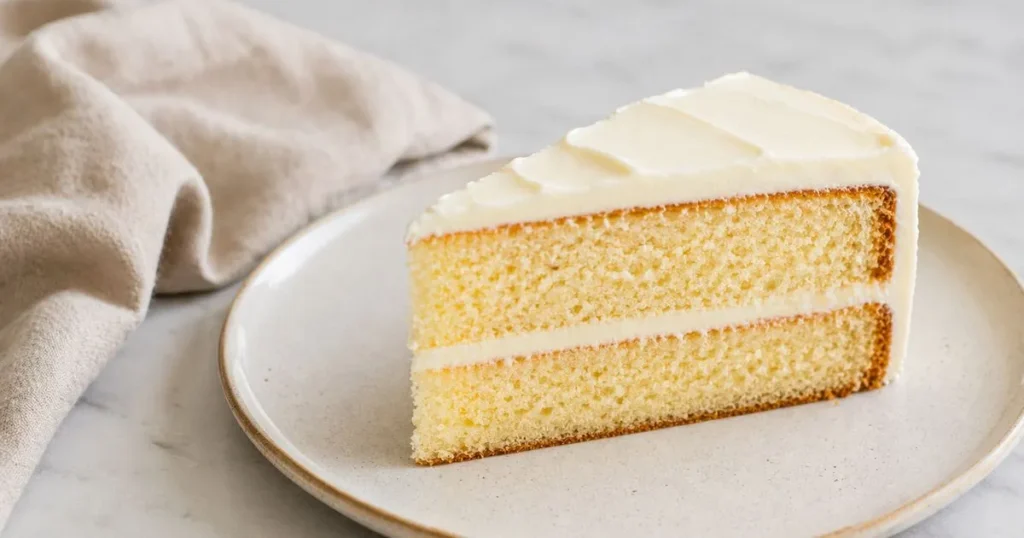
A great gluten free cake recipe isn’t a compromise; it’s just a different way of doing things. Once you know why gluten-free batters work the way they do and provide them with the right ingredients, like the proper flour, a rested batter, and room-temperature components, the final result is really just like a regular cake. How about trying this one for your next celebration and letting us know how it went in the comments? If you’re making a collection of gluten free desserts, our gluten free chocolate brownies are the next smart choice.
Frequently Asked Questions
1. Can I make this gluten free cake recipe in one 9×13 inch pan? Yes. Pour all the batter into a greased and lined 9×13-inch pan and bake at 350°F for 35 to 40 minutes. Check the center with a toothpick around 35 minutes.
2. Which gluten free flour brand works best? Bob’s Red Mill 1:1 Baking Flour and King Arthur Measure for Measure are the best choices for reliable results. Both contain xanthan gum and behave consistently. Avoid using single-grain flours such as plain rice flour or plain almond flour by themselves; they should be mixed with other flours.
3. Why is my gluten free cake still wet and sticky in the center? Two possible reasons could be that the item wasn’t baked enough or that the batter wasn’t left to rest. Check that your oven is completely hot, turn the baking pans halfway through cooking, and use a toothpick to test if the cake is done before taking it out.
4. Can I prepare this cake in advance? You can bake the layers up to two days in advance and keep them wrapped at room temperature, or you can freeze them for up to two months. Frost on the day you plan to serve it.
5. Does this recipe work for cupcakes? Absolutely. Fill the cupcake liners about two-thirds full with batter and bake them in a preheated oven at 350 degrees Fahrenheit for 18 to 22 minutes. This batter makes about 18 standard cupcakes.