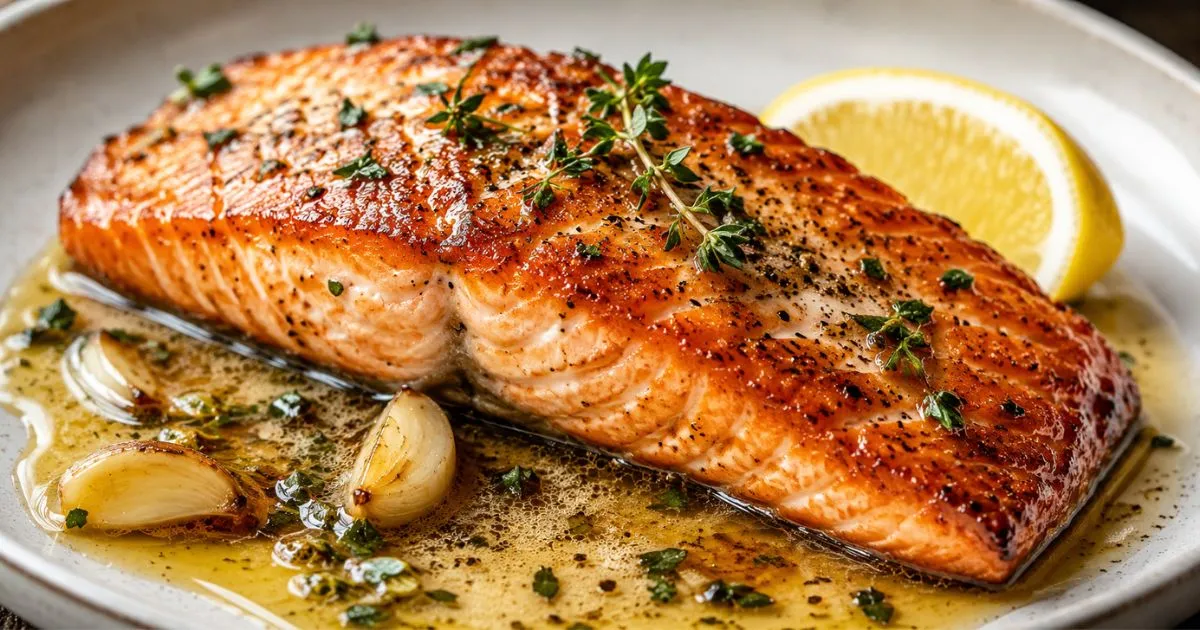
Ingredients
Method
- Take the salmon out of the fridge and let it sit for 15 minutes before you start cooking. Pat both sides thoroughly dry with paper towels. Season the bare side of the meat heavily with salt and pepper. Leave the skin as it is for now; salt takes out moisture and can stop it from getting crispy.
- Place a heavy-bottomed stainless steel or cast-iron skillet over medium-high heat for 2 to 3 minutes until it becomes very hot. Add the avocado oil and swirl to coat the pan. The oil should shimmer immediately.
- Place the fillets in the pan with the skin side facing down, and use a spatula to press them gently for the first 30 seconds to make sure they are fully touching the pan. Resist the urge to move them. Cook for 4 to 5 minutes until the skin becomes deep golden and crispy, and the flesh inside turns white or cloudy about two-thirds up the side.
- Flip the fillets carefully. Put the butter, garlic, and thyme directly into the pan right away. As the butter starts to foam, gently tilt the pan and use a spoon to keep pouring the fragrant butter over the meat side to cook it evenly. Cook for another 2 to 3 minutes, basting often and leaving the pan uncovered.
- Check if the salmon is done by gently flaking it at the thickest part; it should still have a slightly clear center. Use an instant-read thermometer to make sure it reaches 52–55°C or 125–131°F for a perfectly cooked, smooth texture. If you like your food fully cooked, try to reach 60 degrees Celsius or 140 degrees Fahrenheit.
- Put the dish on a warm plate, add some lemon juice, and let it sit for 2 minutes before you serve it.
Notes
Nutritional values are estimates based on a 170g Atlantic salmon fillet with butter and oil as listed. Values will vary depending on the exact size and fat content of your fish. For precise tracking, weigh your fillet raw and input it into your preferred macro calculator.