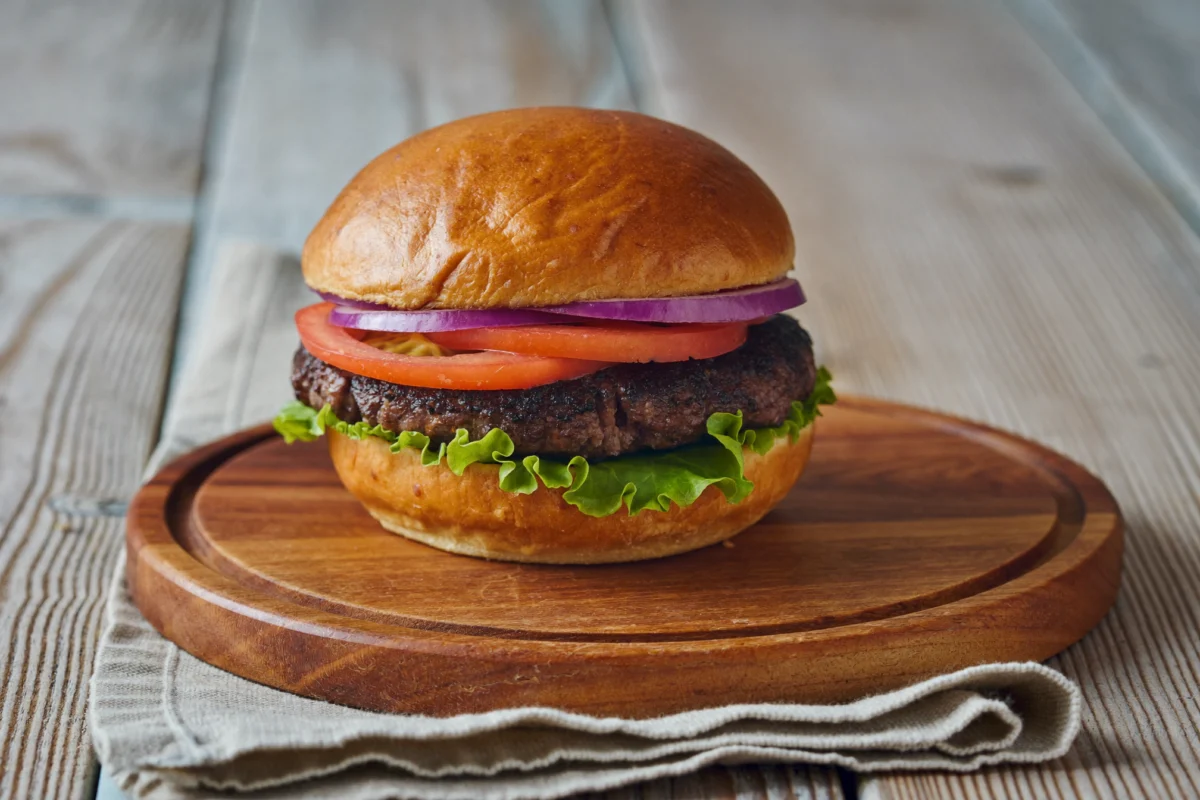
You’re about to bite into a burger, and one question stops you: is this real protein, or just a calorie bomb in a bun?
Here’s the honest answer to how much protein in a burger: anywhere from about 11 grams to more than 30 grams. The calories swing even more, from roughly 125 to well over 1,000. The word “burger” covers a lean homemade patty and a bacon-stacked double, and those two aren’t playing the same game.
Whether you’re counting macros, trying to eat more protein without blowing your calorie budget, or just curious before your next order, this guide puts the real numbers for 7 popular burger types side by side, so you can pick the one that fits your goal.
Quick answer: a cooked beef patty (about 3 oz) has roughly 20–22 g of protein and 140–210 calories. A full fast-food burger lands around 15–36 g of protein and 300–770 calories, depending on size, cheese and sauce.
How Much Protein in a Burger?
Most of the protein comes from the patty. The bun adds a little, cheese adds a little more, and vegetables and sauces add almost none. That means two things:
- Patty weight matters most. A 1/4 lb (4 oz raw) patty cooks down to about 3 oz, and that’s the portion the numbers below describe for the homemade options.
- Lean-to-fat ratio changes calories, not protein, much. A leaner patty gives you about the same protein for far fewer calories.
A useful way to compare burgers is protein per 100 calories. The higher the number, the more protein you get for your calories. You’ll find it in the table below.
How Many Calories in a Burger?
The patty is only part of the story. Cheese, a sugary bun, mayo and special sauce all add up. A good example: a plain Whopper lists about 484 calories, while the standard Whopper is about 670. That’s roughly 190 calories from the toppings and sauces alone.
That’s why a burger can range from about 125 calories (a plain veggie patty) to over 1,000 calories (a double with cheese and bacon).
7 Burger Types Compared: Protein and Calories
| Burger type | Serving | Calories | Protein | Protein per 100 calories |
|---|---|---|---|---|
| Lean beef patty (95% lean) | 3 oz cooked | 139 | 21.9 g | 15.7 g |
| Turkey patty | 1 cooked patty (from 4 oz raw) | 166 | 22.4 g | 13.5 g |
| Regular beef patty (80% lean) | 3 oz cooked | 209 | 20.4 g | 9.8 g |
| Veggie patty (generic) | 1 patty | 124 | 11 g | 8.9 g |
| Fast-food cheeseburger (Burger King) | 1 burger | 300 | 15 g | 5.0 g |
| Whopper (Burger King) | 1 burger | 670 | 31 g | 4.6 g |
| Big Mac (McDonald’s) | 1 burger | about 580 | about 25 g | 4.3 g |
The first four rows are patties only, without the bun or toppings. The last three are complete burgers.
1. Lean beef burger (95% lean)
The protein champion per calorie. A cooked 3 oz patty gives you about 22 g of protein for 139 calories. If you only change one thing, switch to lean ground beef.
2. Turkey burger
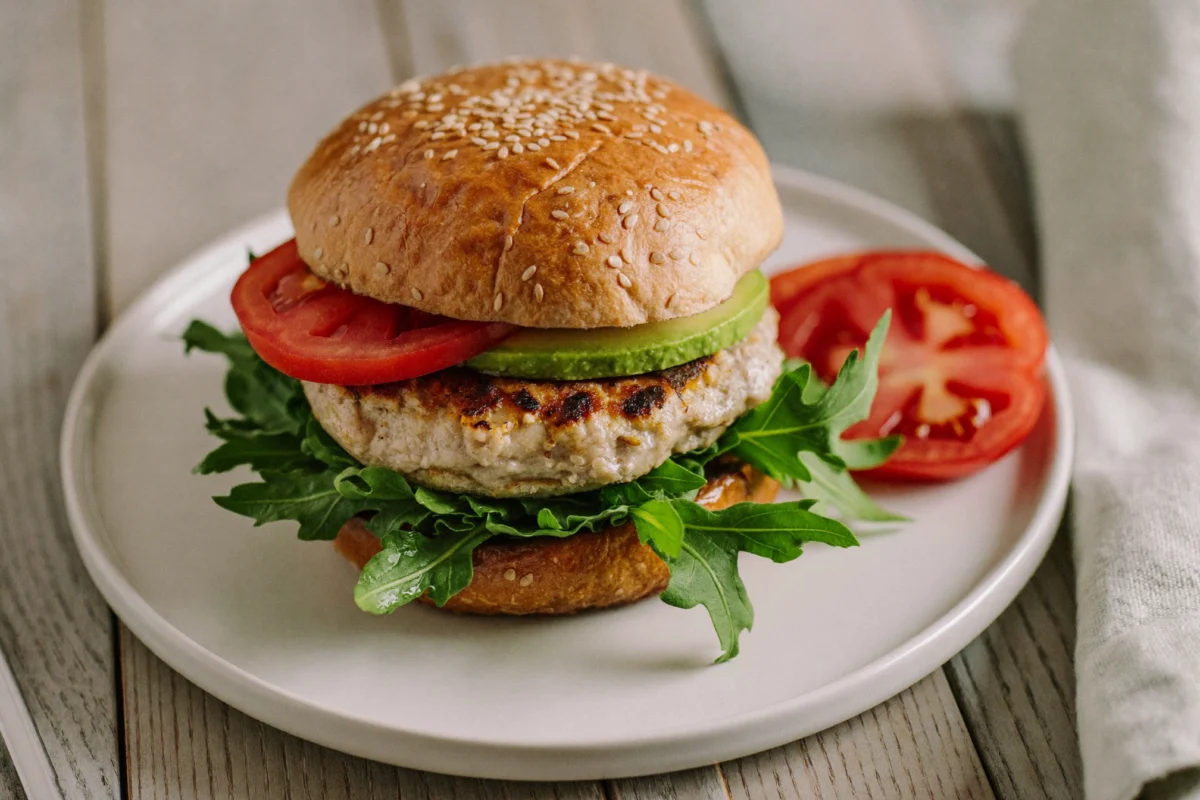
About 22 g of protein and 166 calories for a cooked patty made from 4 oz of raw ground turkey. Numbers vary by brand and by how lean the turkey is, so check the label, especially on pre-made patties, which can be much higher in fat.
3. Regular beef burger (80% lean)
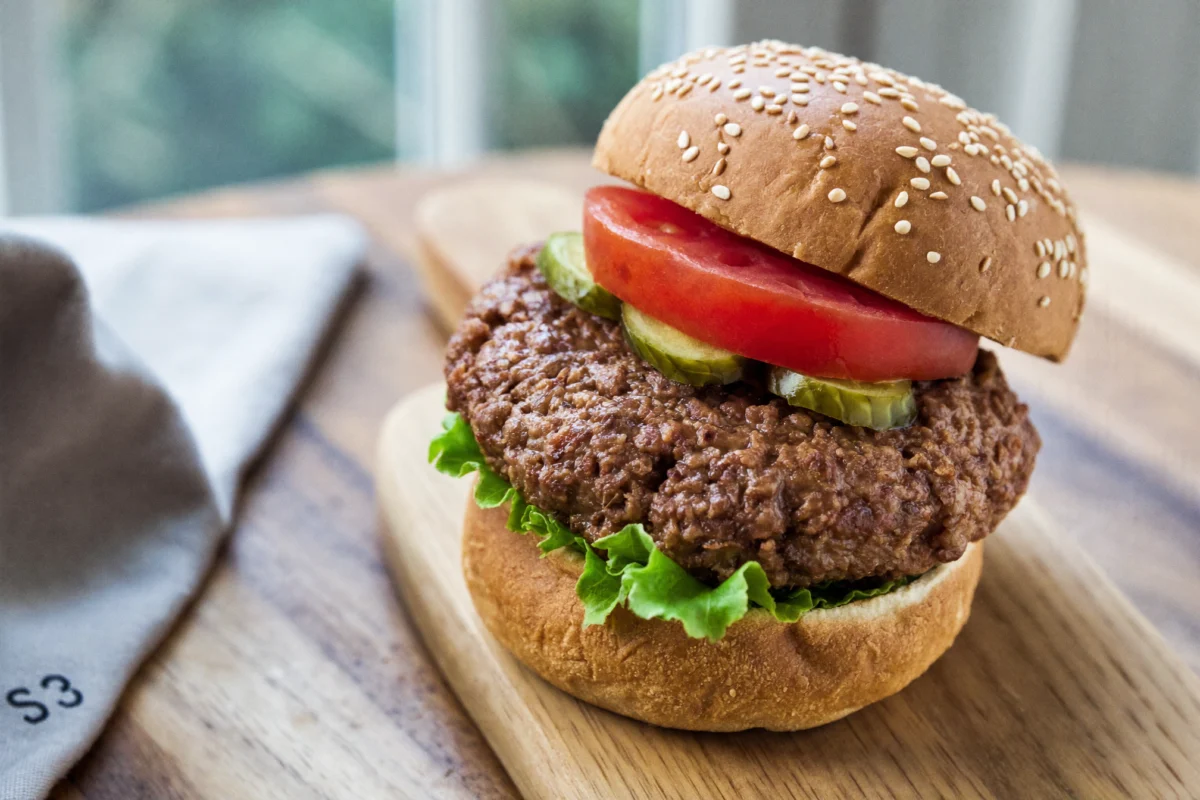
Same protein as the lean version (about 20 g), but around 70 more calories per 3 oz patty, because of the extra fat. It’s the juicy classic, and a perfectly fine choice if you balance the rest of the meal.
4. Veggie burger
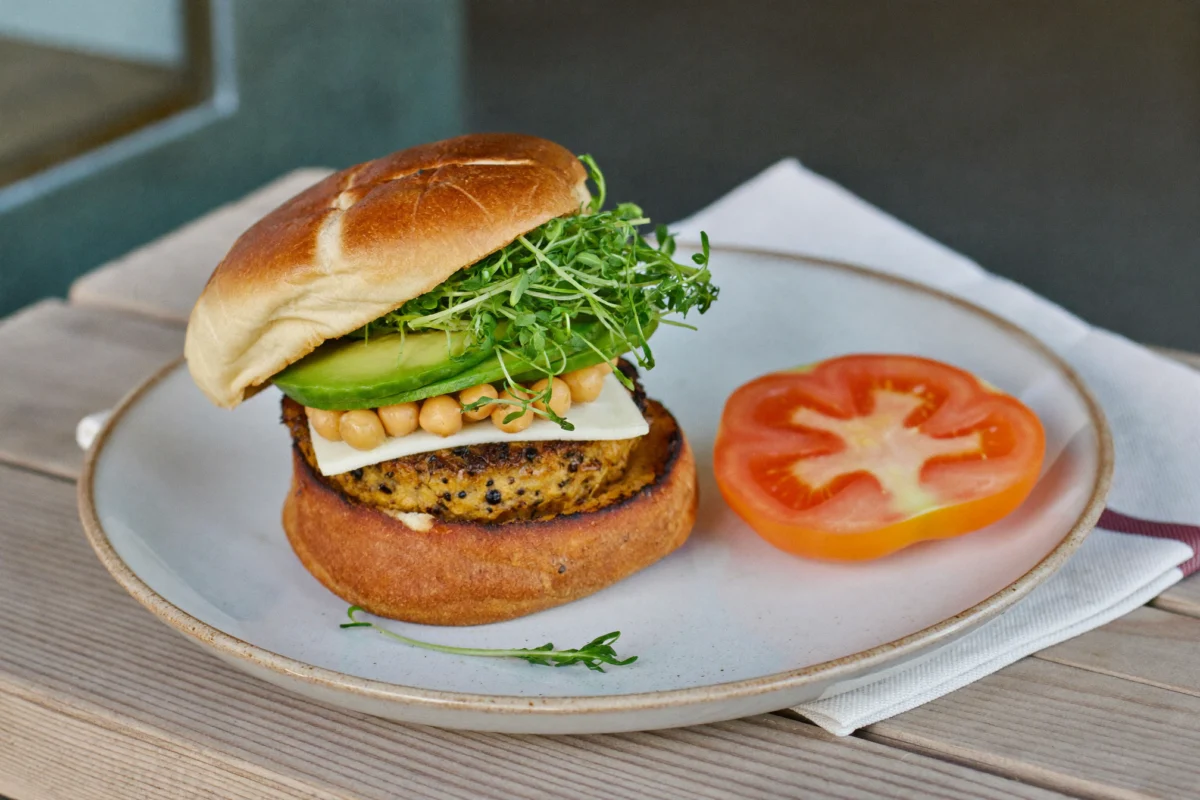
A generic USDA veggie patty has about 11 g of protein and 124 calories, but brands differ a lot. For example, one popular plant-based burger lists about 270 calories and 20 g of protein, while a classic vegetable patty can be 150 calories with only 6 g. Read the label.
5. Fast-food cheeseburger
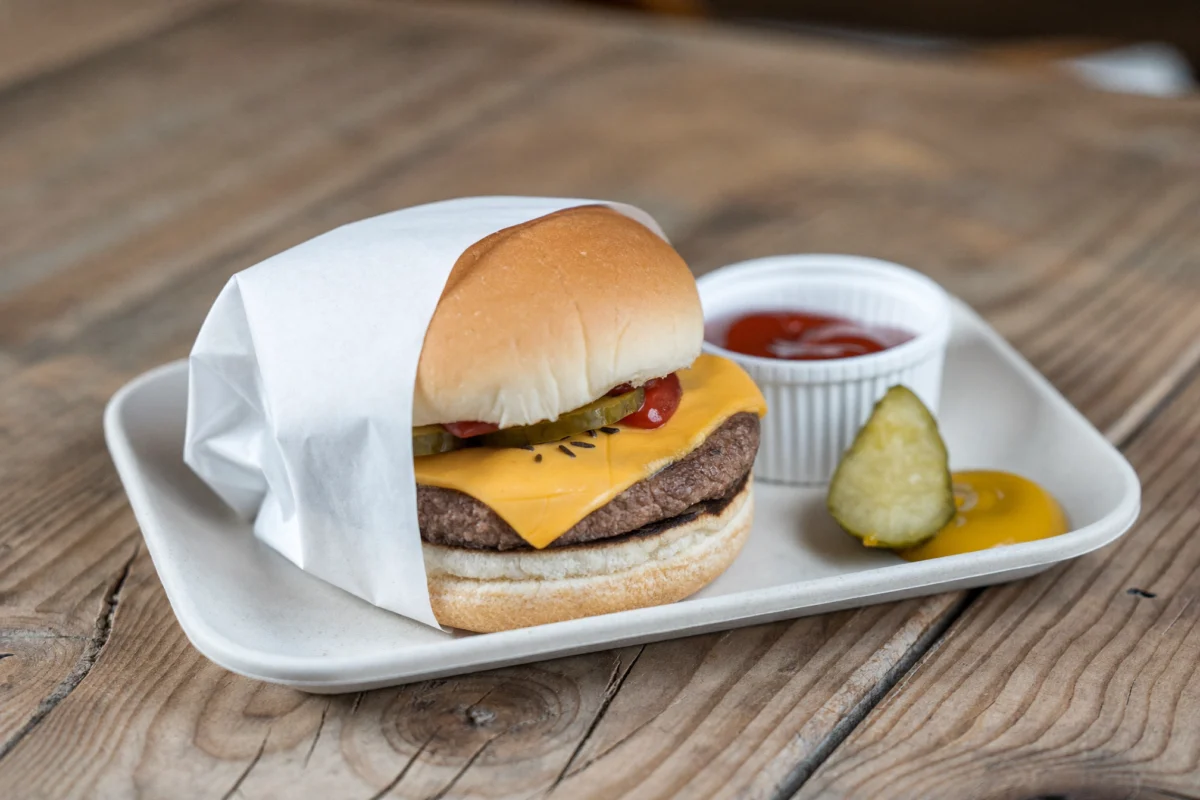
A Burger King cheeseburger lists about 300 calories and 15 g of protein. It’s a small burger, so the totals stay low, but the protein per calorie is much lower than a lean homemade patty.
6. Whopper
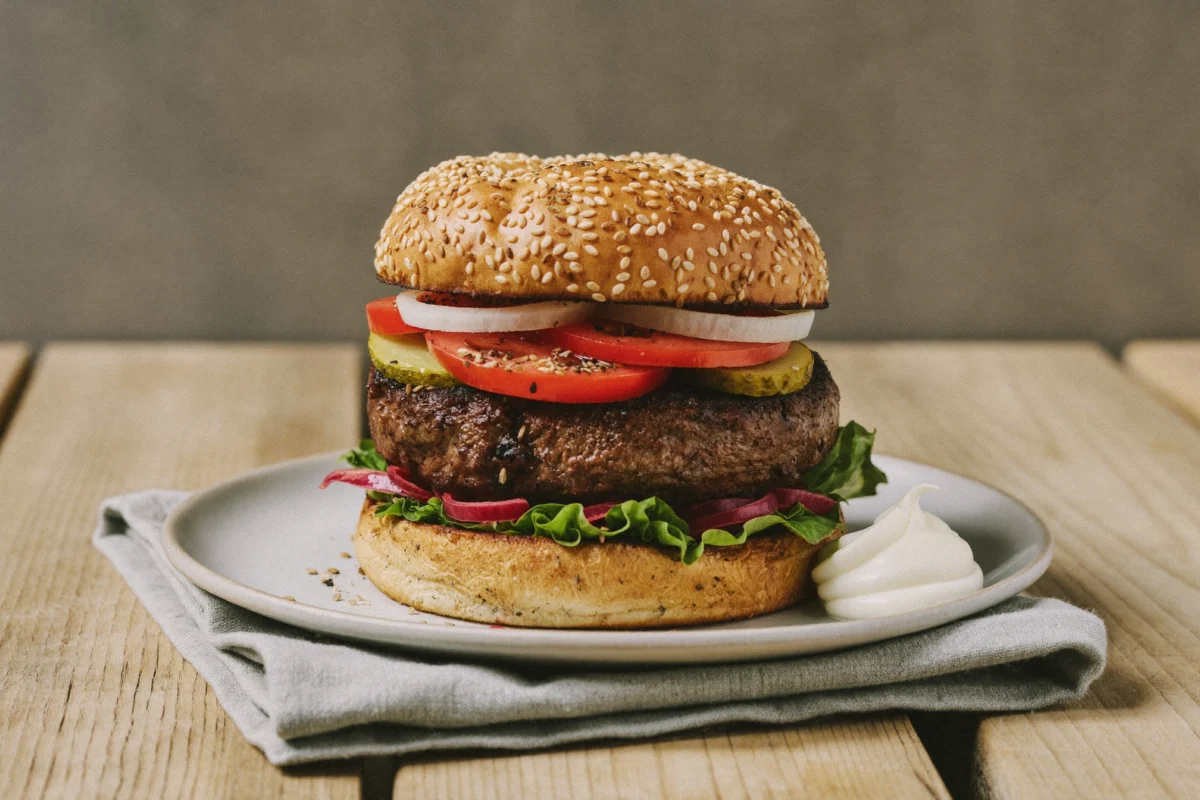
About 670 calories and 31 g of protein. Add cheese and it reaches about 770 calories and 36 g. So the cheese adds roughly 100 calories and 5 g of protein. A double Whopper (no cheese) is listed around 942 calories and 52 g of protein.
7. Big Mac
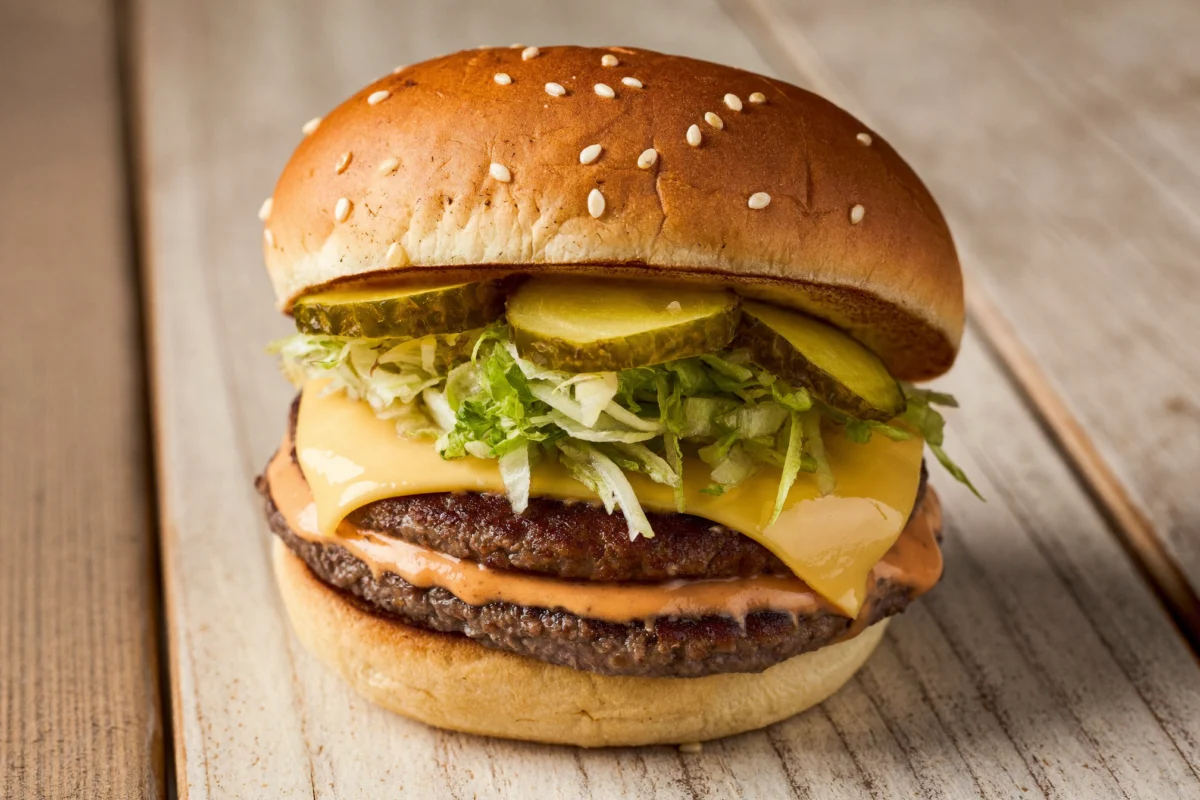
McDonald’s lists a Big Mac at about 580 calories. Protein is around 25 g according to nutrition databases, but menus change, so check McDonald’s own nutrition calculator for the current figure.
Hamburger vs. Cheeseburger: What Does Cheese Change?
Cheese adds protein, but it adds calories and saturated fat too. The Whopper comparison above shows it clearly: one slice moves the burger from about 670 to about 770 calories and from 31 g to 36 g of protein. If protein is your goal and calories matter, one slice is a fair trade. A second slice usually isn’t.
Which Burger Gives You the Most Protein for the Calories?
Ranked by protein per 100 calories, the order is clear:
- Lean beef patty: 15.7 g
- Turkey patty: 13.5 g
- Regular beef patty: 9.8 g
- Veggie patty (generic): 8.9 g
- Fast-food burgers: roughly 4–5 g
The takeaway: a lean homemade patty gives you about three times more protein per calorie than a typical fast-food burger. Fast food isn’t off limits, but it’s a different trade-off.
How to Build a High-Protein, Lower-Calorie Burger
- Choose lean meat. 93–95% lean beef or ground turkey keeps protein high and calories down.
- Watch the sauce. Mayo and special sauces are where many calories hide. Try mustard, or a yogurt-based sauce.
- Pile on vegetables. Lettuce, tomato, onion and pickles add volume and crunch for almost no calories.
- Rethink the bun. A smaller bun, a lettuce wrap or an open-faced burger cuts calories fast.
- Stick to one patty and one slice of cheese. Doubling up is where burgers jump from 600 to 900+ calories.
- Cook it at home. You control the meat, the portion and the toppings.
Looking for more ways to cook lean ground beef? Try these 10 low-calorie, high-protein ground beef dinners, or browse these 5 easy high-protein, low-calorie meals under 400 calories.
High-Protein Lean Beef Burger
Ingredients
Method
- Mix the beef with the salt, pepper and Worcestershire sauce, handling it as little as possible. Shape into 4 patties of about 4 oz (113 g) each, slightly wider than the buns, and press a shallow dimple in the center of each.
- Heat a skillet or grill over medium-high heat. Cook the patties 3 to 4 minutes per side, until the center reaches 160°F (71°C). Lean beef dries out fast, so do not overcook.
- Toast the buns cut-side down for 1 minute while the patties rest.
- Spread mustard on the bottom buns, then add lettuce, the patty, tomato, onion and pickles. Close with the top bun and serve right away.
Notes
FAQ
How much protein is in a typical hamburger?
A cooked beef patty of about 3 oz has roughly 20–22 g of protein. A full burger with bun and toppings usually lands between 15 and 36 g, depending on size.
How many calories are in a burger?
It depends on the type. A lean patty alone is about 140 calories, a regular beef patty about 210, a cheeseburger around 300, and large fast-food burgers can reach 670–770 calories or more.
Is a turkey burger healthier than a beef burger?
Not automatically. Lean turkey and 95% lean beef are similar in protein and calories. Turkey is lower in calories than regular 80% lean beef, but fatty pre-made turkey patties can erase that advantage.
Do veggie burgers have as much protein as beef?
Usually less. A generic veggie patty has about 11 g of protein versus about 20–22 g for a beef patty, although some plant-based brands reach around 20 g.
Does cooking change the protein in a burger?
The patty loses water and some fat as it cooks, so it weighs less, but the protein stays about the same. That’s why it’s best to compare cooked weight with cooked weight, or raw with raw.
The Bottom Line
So, how much protein in a burger? Between about 11 and 36 g, with most beef burgers sitting around 20 g in the patty. The real difference between burgers is the calories that come with that protein. Pick lean meat, keep the toppings simple, and the same burger gives you far more protein for far fewer calories.
Nutrition values come from USDA FoodData Central data and from each chain’s published nutrition information. They are approximate and vary by brand, portion size, recipe and preparation, so always check the label or the restaurant’s current nutrition calculator.